352.204.0094
[gtranslate]

Most people treat skincare like paint — layering on serums and creams and hoping the surface looks smoother. The problem is not the paint. The problem is the frame underneath.
Collagen and elastin make up the internal scaffold that holds your cheeks up, defines your jawline, and keeps everything from slowly folding inward.
You cannot fix a structural failure with more stuff. Moisturizer can gloss over dryness, but it cannot tell your skin to build new support beams.
Peptides do exactly that.
These short amino acid chains act like work orders to your skin’s construction crew, telling it to stop coasting and start rebuilding collagen, elastin, and other structural proteins where you actually need them.
This guide breaks down which peptides actually rewrite your skin’s blueprint and how to plug them into a routine that upgrades the foundation.
TL;DR: Peptides are Structural Signals
- Peptides act as cellular work orders that signal your skin to stop coasting and start rebuilding its internal collagen and elastin scaffolding.
- Match the peptide class to your specific goal—signal peptides for bounce, copper for remodeling, or neurotransmitter peptides to soften expression lines.
- Never mix copper peptides with high-acid actives like Vitamin C or AHAs, as low pH environments deactivate the signal and waste the product.
- Real structural changes like improved firmness and “snap-back” require a consistent 4-to-12-week window to allow for full cellular turnover and remodeling.
What Are Peptides in Skincare?
Peptides are short chains of amino acids — small slices of larger proteins — that your skin uses as instructions to repair, rebuild, and stay organized. They already live in your skin as fragments of structural proteins, like:
- collagen
- elastin
- keratin
- other proteins that seal your barrier and keep water in
What Do Peptides Do For Your Skin?
When your skin needs to fix something, it breaks those big proteins into smaller peptide signals that tell cells what to do next, whether that means:
- make more collagen
- dial down inflammation
- reinforce the barrier
So if peptides already exist in your skin, why put them in skincare?
Because natural signaling slows down with age, UV, stress, and hormonal shifts, which means the “repair messages” do not fire as often or as strongly.
Topical peptide formulas, oral collagen peptides, and injectable peptide therapies all aim to reintroduce or amplify those same signals from the outside, so you can nudge skin back into repair mode instead of waiting for a full‑blown problem to force it there.
What Are the Best Peptides for Skin?
The best peptide depends on the job you want done — more elasticity, better repair, softer lines, or a stronger barrier. Each peptide family hits a different target in your skin.
Collagen‑supporting peptides focus on bounce and firmness, while copper, neurotransmitter, enzyme‑inhibiting, and barrier peptides lean into repair, wrinkle control, protection, and resilience.
1. Collagen Peptides for Skin Elasticity
- What they are: Collagen‑related peptides act as targeted signals that tell fibroblasts to build more collagen and elastin, so your skin regains thickness, firmness, and snap‑back instead of slowly collapsing inward.
- When to use them: You reach for collagen peptides when fine lines linger around the eyes and mouth, when your neck or chest starts to look crepey, or when you want to protect good structure before it visibly drops.
- Common collagen peptides:
- Matrixyl‑type peptides (palmitoyl pentapeptide‑4, palmitoyl tripeptides) that signal new collagen and soften fine lines.
- Hydrolyzed collagen peptide supplements (often type I and III) that support elasticity and hydration from within.
- Tripeptide and tetrapeptide complexes that target firmness and density along the jawline, neck, and mid‑face — the first areas to show sag.
Collagen‑focused peptides push your skin to rebuild its internal scaffold so lift and bounce feel less like a filter and more like your baseline.
Oral collagen peptides then reinforce that work from the inside, backing topical formulas and sunscreen so your results come from structure, not just surface glow.
2. Copper Peptides for Skin Repair and Firmness
-
- What they are: Copper peptides are short amino acid chains bound to copper that deliver this trace mineral into the skin and signal cells to repair and rebuild structural proteins such as collagen and elastin.
- When to use them: You reach for copper peptides when your skin looks slack or sun‑worn, when texture feels uneven, or when you need serious recovery support after in‑office treatments like microneedling, lasers, or peels.
- Common copper peptides:
-
- GHK‑Cu, the best‑studied copper peptide, which supports collagen synthesis, wound healing, and visible wrinkle reduction.
- Copper tripeptide complexes in serums and creams that target firmness, elasticity, and post‑procedure redness.
- Multi‑peptide blends that pair copper peptides with signal peptides to double down on repair and anti‑aging in one formula.
Copper peptides step into the repair loop and give your cells the raw material and orders to rebuild after stress.
They work best for people who log real mileage on their skin — long commutes, hard sun, regular treatments — and want that tissue to bounce back cleanly instead of collecting lines, laxity, and rough patches as the price of admission.
3. Neurotransmitter Peptides for Expression Lines
-
- What they are: Neurotransmitter‑modulating peptides work on the talk between nerves and muscles, dialing down the repeated micro‑contractions that etch crow’s feet, frown lines, and forehead lines into the skin.
- When to use them: Use these peptides when lines still disappear at rest but show up every time you talk, laugh, or squint — the stage before they carve in permanently. They also serve people who want a buffer between toxin appointments or a topical option in high‑movement zones when injectables are not on the table.
- Common neurotransmitter peptides:
-
- Acetyl hexapeptide‑8 (often marketed as Argireline) that targets the nerve–muscle signaling involved in expression wrinkles.
- Other short-chain neuropeptides that focus on high‑movement zones like the outer eye area and horizontal forehead lines.
Neurotransmitter peptides play in the same arena as Botox but not in the same league. They nudge overactive muscles rather than switch them off, so you see softening and better prevention.
They fit best as daily insurance: a light layer around the eyes and across the forehead that takes the edge off constant movement while your in‑office treatments handle the heavy lifts.
4. Enzyme-Inhibiting Peptides for Collagen Protection
-
- What they are: Enzyme‑inhibiting peptides target the enzymes (like matrix metalloproteinases) that chew through collagen and elastin, so your skin stops breaking down its own support system faster than it can rebuild it.
- When to use them: They make the most sense on sun‑exposed faces, necks, and hands that already show etched lines, laxity, or that “crumpled” look — the classic signs of photoaging where the problem is ongoing breakdown, not just lack of moisture.
- Common enzyme‑inhibiting peptides
-
- Peptide complexes designed to down‑regulate collagen‑degrading enzymes and support a denser, more resilient dermis.
- Formulas that pair these peptides with antioxidants to defend against UV‑driven enzyme activation in the first place.
Enzyme‑inhibiting peptides work best in your night routine: you load them in after cleansing, back them up with antioxidants, and let daily sunscreen handle the daytime assault so collagen loss slows instead of snowballing.
This combo suits patients who already see sun damage and want to keep what they have left, while other peptide families focus on rebuilding what time and UV already took.
Barrier-Support Peptides for Sensitive and Dry Skin
-
- What they are: Barrier‑support peptides encourage your skin to make more of the structural proteins and lipids that lock moisture in and irritants out, so the surface acts less like a leaky screen and more like a sealed shield.
- Who needs them most: Skin that stings when you wash it, flushes with weather changes, or reacts to “everything” — rosacea‑prone faces, over‑exfoliated routines, and post‑procedure skin that feels tight and glass‑thin instead of resilient.
- Common barrier-support peptides
-
- Peptides that boost key barrier proteins (like filaggrin and involucrin) to improve cohesion between skin cells.
- Repair blends that pair peptides with ceramides, cholesterol, and fatty acids to rebuild the lipid matrix that prevents water loss.
Barrier‑support peptides work best in night creams or serums that feel boring in the best way — soft textures, no sting, and ingredient lists that stack peptides with ceramides and humectants while your sunscreen handles daylight stress.
This lane belongs to patients who want anti‑aging without the constant burn: you calm the barrier first, then let the “spicier” actives ride on top of a stable foundation instead of inflaming an already raw surface.
What Are the Main Benefits Of Peptides For Skin?
Peptides deliver three big wins for skin: a stronger barrier, better firmness, and smoother texture. Each of those comes from a different way peptides talk to your cells.
1. Strengthened skin barrier
A healthy barrier acts like smart armor: it keeps water in, keeps junk out, and lets your skin stay calm instead of flaring at every new product.
Peptides support the proteins and lipids that hold that armor together, so your face stops behaving like a leaky screen and starts acting like a sealed, flexible shield.
If your skin burns when you cleanse, flushes with weather or stress, or feels tight no matter how much cream you pile on — once the barrier stabilizes, redness drops, products sting less, and your routine finally works with your skin instead of against it.
2. Improved firmness and “snap‑back”
Firmness does not come from “rich” creams. It comes from collagen and elastin doing their job underneath.
Signal and collagen‑supporting peptides talk directly to fibroblasts — the collagen‑making cells — and tell them to clock back in, rebuild thickness, and tighten the internal frame.
As that frame strengthens, cheeks stop slowly sliding south, jawlines hold a cleaner line, and fine lines behave more like temporary folds than permanent creases.
3. Texture refinement and smoother surface
Rough, crêpey texture reflects a messy surface landscape — micro‑valleys, uneven turnover, and a matrix that lost its organization.
Certain peptide combinations help re‑organize that matrix and support more even cell renewal, so the top layer lies flatter and reflects light better.
Peptides do their best work where most skincare never reaches — at the level of instructions, not just moisture. The right blend strengthens your barrier, tightens your “scaffolding,” and smooths the tiny surface flaws that make skin look tired even when you sleep and hydrate.
How Do You Use Peptides in a Skincare Routine?
Most peptide products follow the same logic: cleanse, apply your signals, then seal and protect. Some details shift with skin type and intensity, but the job stays the same.
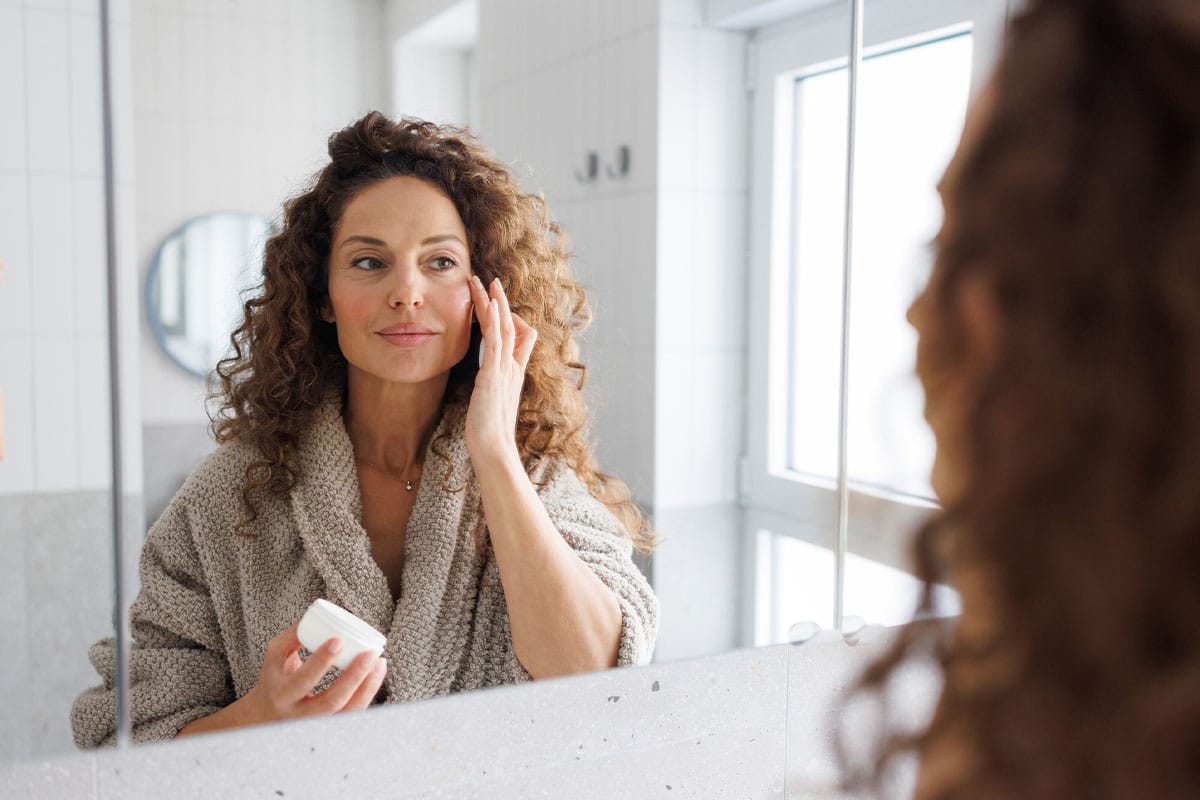
1. Build a simple AM and PM peptide routine
- Morning
-
-
- Cleanse with something gentle enough that your skin feels fresh, not squeaky.
- Apply antioxidant or pigment‑targeting actives if you use them (like vitamin C), then layer a peptide serum once that step settles.
- Follow with moisturizer if you need it, then sunscreen every single day so you are not asking peptides to rebuild what UV destroys.
-
- Night
-
- Cleanse to remove sunscreen, makeup, and city debris.
- If you use retinoids or acids, apply them first or on alternate nights, then layer peptides once the “sting” step is over.
- Seal with a cream that matches your barrier status — lighter for normal skin, richer and more supportive if you run dry or reactive.
If your skin runs sensitive, you let each layer sink in fully before the next and you alternate “spicy” nights (retinoid, stronger acids) with “repair” nights where peptides and barrier support take the lead.
2. Match peptide textures to your skin type and goals
You let the concern drive the formula: collagen and neurotransmitter peptides for firmness and lines, copper and barrier‑support peptides for recovery and resilience.
- Normal/combination skin: Lean on lightweight peptide serums that disappear under a basic moisturizer; you want signals, not heaviness.
- Dry or sensitive skin: Choose richer peptide creams that also pack ceramides and humectants, especially at night, so you rebuild barrier and structure at the same time.
- Oily or acne‑prone skin: Use thin, non‑comedogenic peptide gels or serums that support repair after breakouts or procedures without clogging pores.
3. Track results and know when to escalate
Over 4–12 weeks, you watch for less “crumpling” around expression zones, fewer patches of rough texture, and a quieter baseline — less redness, less sting, steadier hydration.
If you hit a plateau or if laxity and etched lines already run deep, that usually marks the point to bring in medical‑grade topicals, injectable peptides, or energy‑based treatment.
What Should You Not Mix Peptides With?
Peptides play well with most ingredients, but they do not fix an overloaded, angry routine. Certain pairings push your barrier too far and make it harder for those repair signals to land where they should.
1. Avoid harsh stacks in the same layer
High‑concentration acids and very low‑pH actives can turn a smart peptide routine into a burn test:
- Strong AHAs/BHAs and heavy exfoliants: Loading a high‑strength glycolic, salicylic, or peel product in the same step as your peptide serum can spike irritation and leave the barrier too inflamed to use those repair signals wisely.
- Very low‑pH vitamin C: Potent L‑ascorbic acid formulas at low pH already challenge sensitive skin; piling peptides directly on top can tip you into redness, stinging, and barrier damage.
Put your acids on a different night, or apply them first, wait until sting settles, then follow later with a peptide and barrier‑support layer.
2. Watch for too many actives, not just “wrong” actives
Most routines fail from excess, not from one villain ingredient.
Stacking retinoids, strong acids, benzoyl peroxide, and multiple “anti‑aging” serums around peptides in the same night spreads your skin too thin and often leads to peeling, burning, and chronic redness.
Once the barrier cracks, peptides spend all their bandwidth on firefighting instead of collagen support, firmness, or texture repair — you blunt the very benefits you paid for.
Simple sample structures help:
3. Lean into ingredients that play well with peptides
Peptides respond best to a calm, supportive environment:
- Niacinamide: Helps quiet redness, support the barrier, and complement firming and brightening without extra sting.
- Hyaluronic acid and other humectants: Pull water into the skin so new collagen and elastin sit in a hydrated, flexible matrix instead of a dry, brittle one.
- Ceramides and barrier lipids: Lock moisture in and keep irritants out, so peptides can focus on structure and repair rather than patching up daily barrier drama.
- Gentle antioxidants: Help limit oxidative damage that would otherwise chew through the collagen peptides help you build.
A few well‑chosen peptide products, paired with these calm, supportive partners and consistent sunscreen, will always beat a crowded shelf of clashing actives that keeps your skin in survival mode.
Peptides for Skin: Fix the Signals, Not Just the Surface
Peptides for skin all orbit one core truth: aging shows up when your internal signals for repair, collagen, and barrier control start to go quiet.
Collagen‑supporting peptides talk to fibroblasts and keep the “scaffolding” from collapsing.
Copper peptides plug into the repair loop after stress and procedures.
Neurotransmitter peptides take the edge off high‑movement lines.
Enzyme‑inhibiting peptides slow the enzymes that chew through your collagen.
Barrier‑support peptides stabilize reactive skin so every other active has a safer landing pad.
The takeaway is simple: there is no single “best peptide,” only better matches between peptide family and what you see in the mirror.
Build a routine that respects that logic — gentle cleanse, smart actives, peptide step matched to your main concern, barrier support, daily sunscreen — and give it 4–12 weeks for your skin to respond on its own timeline.
Build a Real Signaling Strategy
It is easy to get lost in the noise of skincare marketing, but true structural change requires moving beyond the surface. Your skin’s health is a direct reflection of your internal cellular signaling, and a generic cream cannot override a metabolic slowdown.
At Yunique Medical, we treat your skin as one part of a complex biological system.
We rely on high-resolution data — from hormone optimization and nutrient status to advanced peptide therapy — to ensure the signals your body is sending are clear, loud, and effective.
We design comprehensive strategies that bridge the gap between clinical-grade topicals and systemic longevity.
Our Services
We offer a wide range of services to support your wellness journey, including:
- Hormone Optimization
- Infusion Therapy
- Weight Loss Programs
- Cellular & Functional Medicine
- Precision Longevity
- HeartFit Program
- Sexual Enhancement
- Peptide Therapy
- HOCATT Biohacking
Our Locations
You can find us here:
- Port Orange, FL
- Lady Lake, FL (formerly Fruitland Park Office)
- Ocala, FL
If you’re ready to stop guessing with your routine and start optimizing your biology, bring your labs, your goals, and your history to a Yunique Medical visit.
Let’s build a data-driven roadmap that treats the root cause of aging instead of just managing the symptoms. Schedule a consult today.