352.204.0094
[gtranslate]

Hormonal acne describes deep, often painful breakouts that track with hormone and metabolic shifts instead of basic hygiene issues. It tends to cluster along the jawline and lower face, feels cystic or “under the skin.”
You cannot wash away a hormonal imbalance.
While traditional acne is often a hygiene or bacterial issue, hormonal acne is an internal signaling failure that tells your sebaceous glands to overproduce oil. If your breakouts are deep, painful, and localized to your lower face, you are likely dealing with a “metabolic flare” that requires a systemic fix.
This guide walks through what drives hormonal acne, how to tell if your breakouts fit the pattern, and how a full‑body, data‑driven plan can finally calm your skin long term.
TL;DR: Hormonal Acne Goes Where OTC Cannot Reach
- Hormonal acne is driven by an imbalance in androgen signaling and insulin levels, rather than surface-level bacteria or “dirty” skin.
- Identify hormonal breakouts by their location (chin and jawline) and their cyclical nature, typically flaring during specific phases of your menstrual cycle.
- Topical treatments act as temporary band-aids; long-term clearance requires addressing the androgen-to-estrogen ratio and blood sugar stability.
- Expect a 12-week window to see full results, as your skin needs three full cycles to reflect changes made to your internal hormonal environment.
What is Hormonal Acne?
Hormonal acne describes deep, often painful breakouts that sync up with shifts in androgens, estrogen, progesterone, insulin, and stress hormones. Breakouts tend to cluster along the jawline, chin, and lower cheeks, and flares often show up around your period, major stress, pregnancy, birth control changes, or perimenopause.
What Makes Acne Hormonal at the Root
Hormone and metabolic signals set the stage long before a pimple hits the surface.
- Androgens such as testosterone tell sebaceous glands to pump out more, thicker oil, which makes pores easier to clog.
- Estrogen and progesterone shifts across the cycle, pregnancy, postpartum, and perimenopause change how strongly that androgen push lands on your skin.
- Insulin and IGF‑1 spikes from frequent blood sugar swings drive faster cell turnover and extra sebum, so pores plug from the inside out and inflame more easily.
Oil, dead skin, and C. acnes bacteria then interact in a way that keeps inflammation simmering instead of clearing with a simple routine tweak.
What Hormonal Acne Looks Like on the Skin
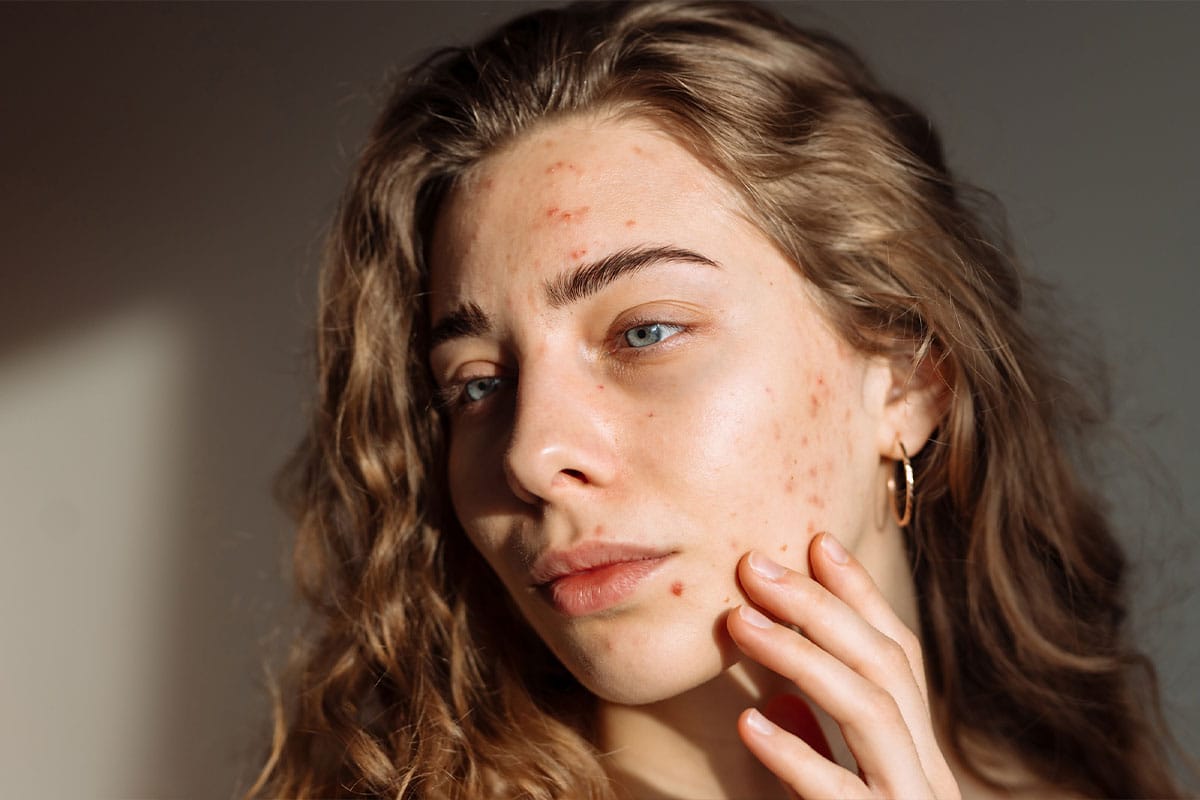
Hormonal acne has a “deep” look and feel you can usually recognize in the mirror.
- Breakouts show up as sore, cyst‑like or nodule‑type bumps that sit under the surface instead of fast‑moving whiteheads.
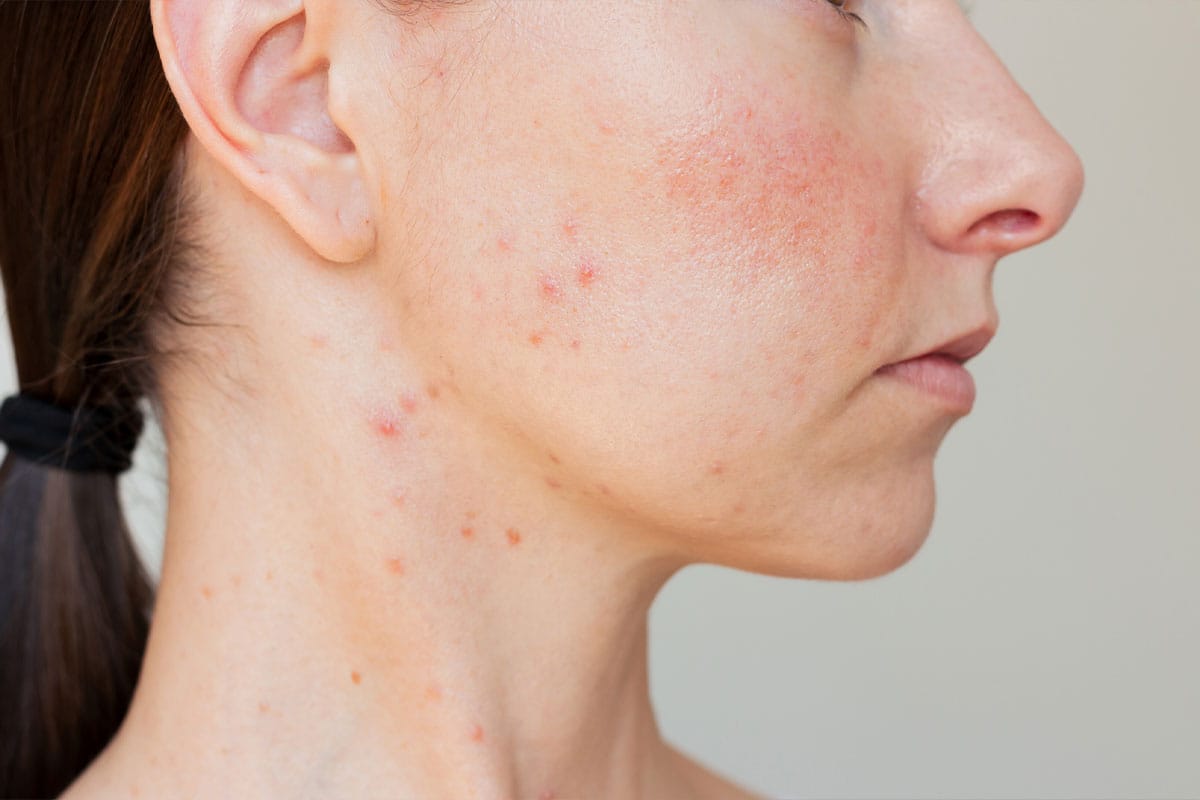
- Lesions line the jawline, chin, and lower cheeks, and can trail down to the neck or across the chest and upper back.
- Spots linger for days to weeks and often leave behind dark marks or scars, even when you avoid picking.
What Hormonal Acne is Not
Identifying the “What” is only half the battle; you must also rule out the lookalikes. Hormonal acne is frequently misdiagnosed, leading to treatments that make the problem worse:
- Fungal Acne (Malassezia Folliculitis): These are small, uniform, itchy bumps caused by yeast, not hormones. They require anti-fungals, not hormone blockers.
- Contact Dermatitis: This is an allergic reaction or “barrier burn” from harsh products. If your skin is peeling and red, you likely don’t need more acne medication; you need barrier repair.
- Purely Comedonal Acne: Typical teenage acne is usually driven by a lack of exfoliation and surface bacteria. If your breakouts don’t follow a monthly cycle and aren’t localized to your jawline, you may just need a better topical routine rather than a systemic hormonal reset.
Who Usually Gets Hormonal Acne?
Hormonal acne usually shows up in people whose hormones and metabolism sit on a short fuse even if teenage breakouts never felt like a big deal.
1. Adult Women in Their 20s, 30s, and 40s
Adult women across their reproductive years carry the highest risk because estrogen, progesterone, and androgens move constantly, not just at puberty.
Deep, lower‑face breakouts often start in the late 20s or 30s, right when most people expect their skin to grow out of acne, which makes the pattern feel unfair and random until hormones enter the conversation.
2. People with PCOS or Irregular Cycles
Women with PCOS or irregular cycles ride bigger hormone and insulin swings, so oil glands receive louder, less predictable signals all month.
Acne in this group rarely stands alone. Cycle gaps, hair changes, weight shifts, and sluggish energy usually sit in the same story once you zoom out.
3. Individuals on Testosterone or Other Hormone Therapies
People on testosterone — for gender affirmation, performance, or other medical reasons — often notice new oiliness and cystic jawline, chest, or back acne as androgen levels climb.
Those who tweak birth control, HRT, or other hormone‑active medications also sit in a higher‑risk lane because every change rewrites the instructions their skin receives.
4. People With a Family History of Stubborn Adult Acne
People who watched a parent or sibling battle adult‑onset, lower‑face, or cystic acne often carry the same baseline wiring, from androgen sensitivity to insulin resistance and inflammatory tendencies.
Skin might look like the main problem, but the shared script usually lives in hormone signaling, metabolic control, and how easily the body tips into chronic low‑grade inflammation.

When Do Hormonal Acne Flare‑Ups Strike — and What Sets Them Off?
Hormonal acne flare‑ups usually hit when timing and triggers stack together — cycles, stress, blood sugar, and hormone shifts all pushing your oil glands in the same window.
1. Menstrual Cycle Windows
Flares tend to show up in the week before your period or around ovulation, when estrogen and progesterone reshuffle and androgens lean louder at the skin level. Heavy work weeks or poor sleep stacked on top of that hormone window often turn a mild bump into a full jawline breakout.
2. Cortisol Spikes From Stress
Acute or chronic stress raises cortisol, and cortisol pulls insulin and androgens up with it. A brutal deadline week, conflict, or jet lag often turns into a flare 48–72 hours later, right on the jawline or chin.
3. High‑Glycemic and Dairy‑Heavy Eating
Frequent sugar hits, white carbs, and sweetened drinks keep insulin and IGF‑1 high, which thickens sebum and speeds up cell turnover inside the pore.
Dairy adds another IGF‑1 push for some people, so flares often follow weekends of pizza, desserts, or milky coffee runs even with a “clean” routine.
4. Hormone and Medication Changes
Starting, stopping, or switching birth control, testosterone, steroids, or hormone‑active meds often reshapes flare timing because the endocrine “volume” gets retuned overnight.
Certain metabolic or psychiatric medications that shift weight, insulin, or prolactin can also change how often and how hard hormonal acne fires, which makes a full med and supplement list part of any real flare map.
5. Pregnancy and Postpartum Shifts
Pregnancy pushes hormone levels into new territory, so early trimesters can deliver either a “glow” or deep, stubborn acne that sits lower in the skin.
After delivery, the hormone drop — plus sleep loss, breastfeeding changes, and stress — often triggers a second wave of flares while the body fights for a new baseline.
6. Perimenopause and Menopause Transitions
Perimenopause and menopause change the balance between estrogen and androgens, so oil glands feel more androgen pressure even when labs read “normal.”
New lower‑face acne in the 40s or 50s often links to this shift, especially when hot flashes, night sweats, and mood swings land in the same season.
How Can You Tell If It’s Hormonal Acne?
Hormonal acne gives itself away through patterns — where it lives, when it flares, how it feels, and what else your hormones do at the same time.
1. It Lives on the “U‑Zone” of Your Face and Upper Body
Hormonal acne clusters along the jawline, chin, and lower cheeks instead of the classic forehead‑nose T‑zone that shows up in puberty.
Breakouts often trail down to the neck and can appear on the chest and upper back during flares, while the central forehead stays relatively calm most of the month.
2. It Flares on a Repeating Schedule Tied to Hormones or Stress
Flares usually spike in the week before a period or around ovulation, then settle and repeat with each cycle.
Breakouts also ramp up after big stress hits, sleep loss, travel, or major life changes, and often start or worsen after starting, stopping, or switching birth control, during pregnancy, postpartum, or around perimenopause.
3. It Feels Like Deep, Sore, “Under‑The‑Skin” Bumps
Hormonal acne shows up as painful, cyst‑like nodules or papules that feel like underground knots rather than tiny surface whiteheads.
Lesions rarely come to a clear head, can throb when you touch them or lie on that side, linger for a week or longer, and often leave dark spots or scars even when you never pick.
4. It Comes With Other Hormone or Metabolic Symptoms, Not Just Skin Issues
Breakouts often pair with irregular periods, very heavy or very light bleeding, or cycles that suddenly change length.
Many people also notice new facial or body hair growth, hair thinning on the scalp, weight gain or resistance to weight loss, energy crashes, mood swings, or blood sugar swings, which point toward PCOS, thyroid imbalance, or insulin resistance in the background.
5. It Ignores Basic Acne Products and Responds When You Address Hormones
Hormonal acne rarely fully clears with over‑the‑counter washes and spot treatments, even when you keep a consistent routine.
Breakouts start to calm when cycle health, blood sugar control, stress, sleep, and targeted hormone care improve, and many people ultimately need prescription topicals plus hormone‑directed medications or protocols to keep flares under control.
How Can You Get Rid of Hormonal Acne for Good?
How you clear hormonal acne for good depends on whether you calm the surface, fix the signals underneath, and give your skin enough time to remodel.
1. Use Topical Treatments to Calm Active Breakouts
Topicals handle what you see on the surface — clogged pores, bacteria, and inflamed lesions.
Retinoids, benzoyl peroxide, salicylic acid, and azelaic acid reduce comedones, speed up cell turnover, and cut down on C. acnes, which shrinks existing breakouts and prevents new ones from forming.
2. Add Oral Medications When the Skin Needs Backup
Oral meds step in when breakouts are deep, widespread, or scarring.
Short‑term oral antibiotics can cool inflammation, while combined oral contraceptives and spironolactone help dial down androgen impact at the skin; severe or refractory cases may need isotretinoin under close medical supervision.
3. Target Hormones and Metabolism Directly
Hormone‑focused care addresses why oil glands keep misbehaving in the first place.
Optimizing sex hormones, improving insulin sensitivity, checking thyroid and adrenal status, and treating conditions like PCOS shift the internal environment so skin stops receiving a constant “produce more oil” message.
4. Reshape Lifestyle Inputs That Keep Skin on Edge
Daily habits either lower or raise the threshold for flares.
Blood‑sugar‑steady eating (more protein, fiber, and whole foods; fewer frequent sugar spikes), stress tools, better sleep, and consistent, non‑comedogenic routines reduce cortisol and insulin swings so hormonal acne fires less often and less intensely.
5. Build a Simple, Consistent Retinoid‑anchored Routine
Retinoids sit at the center of long‑term acne control because they normalize cell turnover and prevent new micro‑comedones.
A steady routine — gentle cleanse, targeted actives (like retinoid and benzoyl peroxide or azelaic acid), barrier‑supporting moisturizer, and daily sunscreen — keeps pores clear enough for hormonal work to actually show on the surface.
When Will You Actually See Results?
Most people start to see fewer new breakouts and softer flares after 6–8 weeks of consistent topical and lifestyle changes.
Clearer, more predictable patterns usually show up after one to three cycles of hormone‑focused care. More stable, scar‑sparing skin often takes 3–6 months as internal signals and the skin barrier both reset.
When Should You See a Specialist for Hormonal Acne?
If you are over 25 and still waiting to grow out of it, you are likely dealing with a systemic issue that OTC products cannot reach. You should seek a clinical evaluation if:
1. Your acne leaves scars or long‑lasting marks
Deep cysts, nodules, and painful jawline breakouts that heal with pitted scars or stubborn hyperpigmentation call for medical treatment, not stronger scrubs. Ongoing scarring means inflammation runs high and fast enough to permanently remodel the skin, which makes early, aggressive control the better trade than years of damage repair.
2. Your skin changes travel with hormone‑type symptoms
Breakouts that ride alongside irregular cycles, very heavy or very light periods, new facial or body hair, thinning scalp hair, weight shifts, or unusual fatigue point toward PCOS, thyroid imbalance, or insulin resistance. A specialist can connect those dots, order targeted labs, and treat the underlying endocrine issue instead of throwing more spot treatments at the surface.
3. Your routine is dialed in — and the cycle pattern has not budged
A consistent, evidence‑based routine for 90 days — gentle cleanse, non‑comedogenic moisturizer, retinoid, and other appropriate actives — should at least soften the intensity or duration of flares. If the same pre‑period or stress‑linked breakouts keep firing on schedule anyway, a specialist visit helps move the work upstream to hormones, metabolism, and medications instead of endlessly swapping products.
Your Skin is a Dashboard for Your Internal Health
Hormonal acne is rarely just a skin problem; it is a signaling failure. When your jawline flares or deep cysts refuse to heal, your body is providing you with real-time data about your androgen levels, insulin stability, and stress response.
Chasing these breakouts with surface-level washes is a losing game because it ignores the internal “work orders” telling your oil glands to overproduce. Long-term clearance requires a shift from reactive spot-treating to proactive signaling management. By stabilizing your metabolic health and balancing your hormonal ratios, you aren’t just clearing your skin—you’re optimizing the entire system that drives it.
Yunique Medical: Build a Plan Around Your Biology
At Yunique Medical, we believe that real optimization starts with real data. We don’t guess with your health or rely on generic templates.
We look at the whole picture — your history, your labs, your hormones, and your lifestyle — to understand how your body is actually functioning.
Our approach is deliberately data-heavy and conversation-driven.
We use comprehensive testing to identify the specific levers that need to be pulled to help you feel younger, stronger, and more in control of your life.
Our Services
We offer a wide range of services to support your wellness journey, including:
- Hormone Optimization
- Infusion Therapy
- Weight Loss Programs
- Cellular & Functional Medicine
- Precision Longevity
- HeartFit Program
- Sexual Enhancement
- Peptide Therapy
- HOCATT Biohacking
Our Locations
You can find us here:
- Port Orange, FL
- Lady Lake, FL (formerly Fruitland Park Office)
- Ocala, FL
Stop managing symptoms in the dark.
Book a Yunique Medical consultation today. Bring us your recent labs and your top three health goals, and let’s build a strategy that treats your unique physiology.